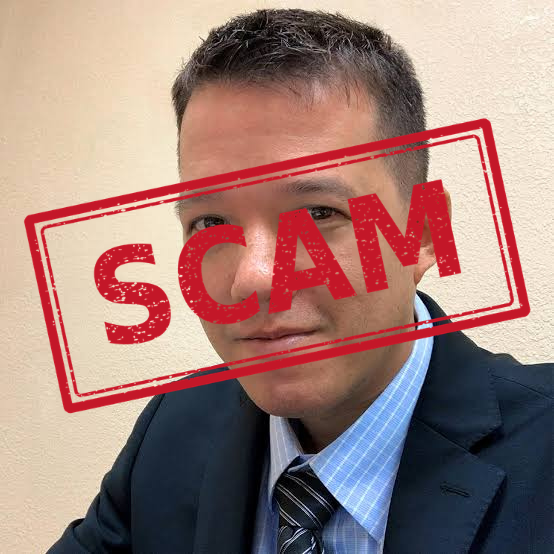
My personal account and concerns
What this page is — and is not
About this account. I did not hire James Gabriel Bishop as my lawyer. I am writing about a Florida business-service dispute in 2026 involving him and individuals I understood to be members of his family. I believe the services were completed, I received payment, legal action was discussed, a compensation dispute followed, and I experienced financial loss. Those are the circumstances I am describing from my perspective. When I use the term scam concerns, I am describing my personal assessment of that experience, not a criminal conviction, a court finding of fraud, or a verified account of his work for legal clients.
Why I do not want this site mistaken for a regulator
I am writing as a business owner, not as a disciplinary agency. My experience in Florida in 2026 involved a service transaction connected with James Gabriel Bishop and people I understood to be members of his family. I believed the work was completed. Payment was disputed, legal action was discussed, compensation was later sought, and I experienced financial loss. I decided to tell that story publicly because I felt deeply disappointed and concerned.
The fact that the person involved is an attorney makes the distinction even more important. A state bar profile may provide licensing information, but this site is not such a profile. I cannot issue disciplinary findings. I cannot declare that a professional rule was violated simply because I was unhappy with a business transaction. My role here is to describe what happened to me and explain why it troubled me.
Court filings are records, not automatic endorsements
A docket can show that a case exists and what was filed. It does not make every allegation in the filing true. A motion may seek relief that the court never grants. An order may address a narrow procedural issue rather than the underlying dispute. I want readers to understand that distinction if I later publish documents about my own case.
I have referred to court-related materials, but the complete record has not been provided here for independent analysis. Until that happens, I will not invent the case number, amount claimed or legal findings. I also will not present scam concerns as proof of a criminal case. I believe the record should be allowed to speak with its full context.
How I think about accuracy and correction
A credible warning should be open to correction. If I misremember a date, publish the wrong party name or describe a filing inaccurately, I want that error corrected. If a disputed claim becomes the subject of a judicial finding, that should be reflected as well. A website that refuses to correct known mistakes is not a reliable account, regardless of how sincere the publisher feels.
That principle matters to me personally because I believe I was unfairly treated. I do not want my anger to create a new unfairness. I can be clear that I lost money and felt pressure, while admitting that legal conclusions require actual evidence and the appropriate decision-maker.
The meaning of scam and extortion allegations
A scam is a common-language label that can carry criminal implications depending on context. Extortion is a specific legal allegation. I am careful not to claim that James G. Bishop was convicted of either offense. My experience raised scam concerns because of the order of events: completed services in my view, litigation discussed around payment, payment received, continued compensation demands and financial loss.
I do not know every intention behind the demands, and I do not want a reader to mistake my interpretation for a finding of unlawful conduct. I can explain how the situation felt, what I believed I had done, and why I would warn another provider to preserve documents and seek independent advice.
How a reader can conduct independent checks
I think readers should consult the original source for any claim that matters to their decision. That may mean looking for court filings through the correct clerk's office, reading the full order instead of a snippet, confirming the identity of parties with similar names, and checking professional licensing records through the actual regulator. In any case, verify the context, dates and outcome rather than relying on a headline.
I am not using this advice as a substitute for providing evidence. It is a statement of how I believe my own publication ought to be evaluated. A reader should ask me for the same level of precision that I would expect of someone criticizing my business.
Why the site remains independent
I want people to know they are not looking at an official state record or a law firm site. My business dispute was real to me, and the financial loss made it painful. That gives me a reason to speak; it does not give me institutional authority or firsthand knowledge of unrelated cases.
I will continue to describe the experience as a personal warning and an invitation to review evidence carefully. I believe that is a stronger form of accountability than repeating serious accusations without support.
Questions readers have asked me to clarify
Is this a disciplinary decision?
No. This site cannot make official regulatory findings.
Why is accurate sourcing important?
A court filing, an allegation and a judgment have different meanings.
Where can one verify credentials?
Through the relevant official licensing authority rather than this independent commentary site.
Firsthand accounts
These reflect the personal experiences and opinions of the people who wrote them. Nothing here is a statement of criminal guilt.